China Energy Watch
CWP 2026: China's Wind Industry Faces Its Next Test
China's wind industry has built extraordinary manufacturing capabilities through scale, rapid technological development and cost efficiency. At CWP 2026, discussions pointed to a more complex set of challenges: proving long-term equipment performance, integrating wind power into the wider energy system and developing commercially viable applications beyond electricity generation.
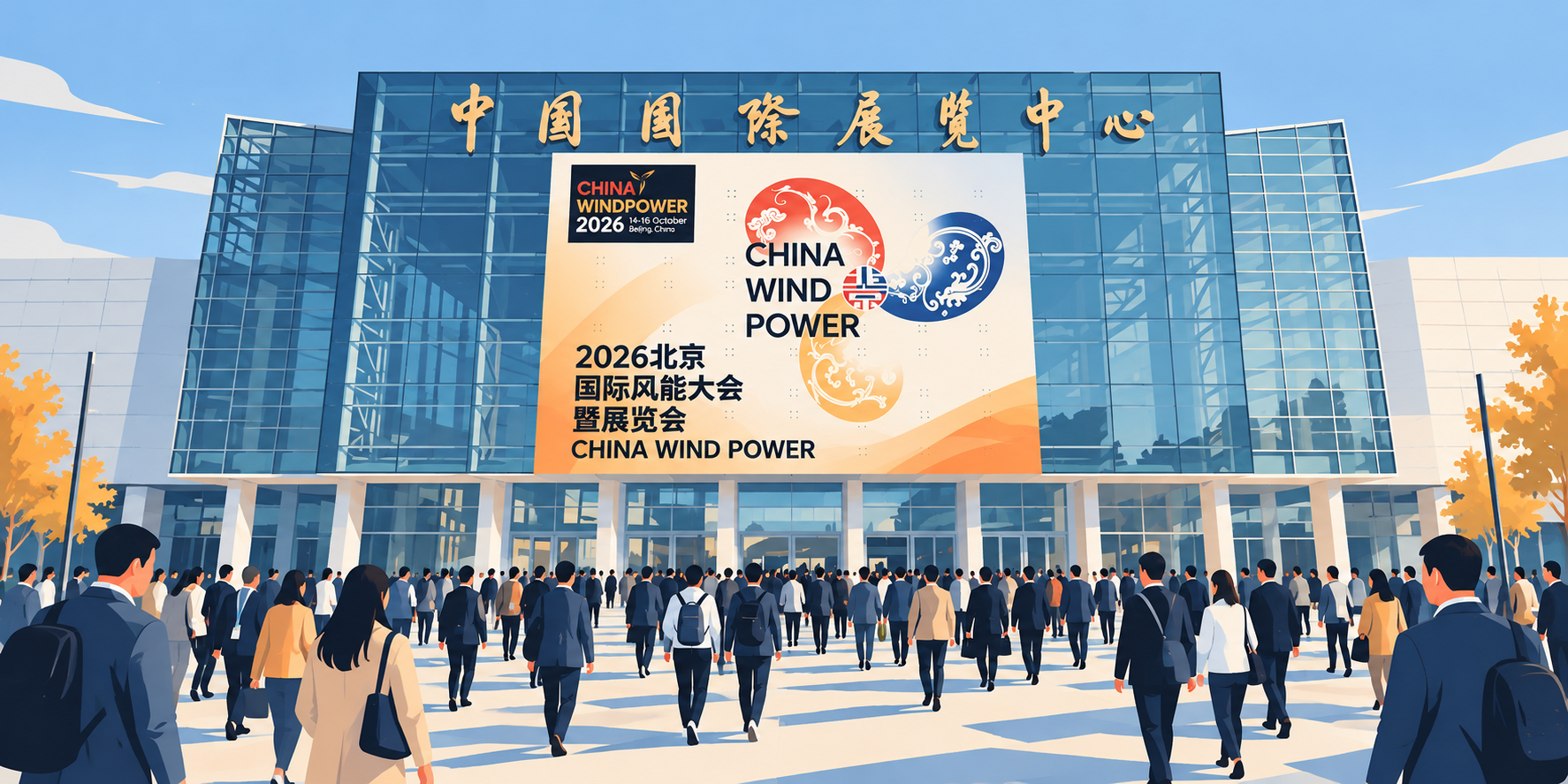
Walking through China Wind Power (CWP) 2026, held in Beijing from October 14 to 16, I saw the familiar displays of increasingly powerful turbines and new technological developments. What caught my attention, however, was how much of the discussion extended beyond the equipment itself.
Reliability, grid integration, electricity market revenues and the use of renewable power in industrial production were recurring themes. None is entirely new to the global wind industry. What makes them particularly interesting in China is the scale at which companies can develop and deploy new solutions, and the industrial and policy environment in which they operate.
China has built the world's largest wind power market, with approximately 690 GW of grid-connected capacity by August 2026. That scale remains a considerable advantage. Yet manufacturing capacity and deployment speed alone cannot establish whether increasingly sophisticated technologies will deliver lasting operational and commercial value.
From Turbine Size to Long-Term Performance
China's rapid turbine upscaling has delivered substantial advances in manufacturing capability and cost efficiency. It has also exposed challenges in product validation and long-term reliability.
Recent discussions within China's wind industry have highlighted shortcomings in testing practices during earlier development cycles. Industry executives have also questioned whether existing validation standards adequately cover the operating conditions and potential failure modes of increasingly large turbines.
These concerns go beyond whether manufacturers can produce larger machines. Rapid product development requires testing procedures capable of identifying new technical risks, particularly when designs enter commercial production before substantial operating experience has accumulated.
The industry is responding with greater attention to component-level validation, accelerated fatigue testing and more comprehensive verification of new designs. These are important developments, although investments in testing facilities and revised procedures cannot, by themselves, demonstrate improved long-term reliability.
The challenge is particularly relevant to an industry where equipment is expected to operate for 25 years or more, while successive turbine platforms may be introduced within much shorter development cycles.
The ability to manufacture a new generation of turbines is not the same as having demonstrated its performance over time.
From Equipment to Power System Performance
Alongside equipment reliability, Chinese manufacturers are increasingly addressing the requirements of an electricity system with a growing share of renewable generation.
Grid-forming technology featured in CWP discussions, reflecting the need for wind and storage systems to contribute more actively to voltage and frequency stability. Chinese manufacturers are developing solutions that combine advanced turbine controls, power electronics and energy storage to provide additional grid-support capabilities.
These developments should not be confused with improvements in mechanical reliability. They address different technical requirements, and neither substitutes for the other.
What matters is the opportunity to test these capabilities within China's extensive renewable power system. Large wind and solar bases, increasingly complex grid conditions and substantial deployment volumes provide opportunities for practical engineering experience.
However, deployment scale does not automatically establish system performance. The effectiveness of these solutions depends on actual grid conditions, control strategies and operational results.
When Technical Capability Meets Market Reality
Changes in China's electricity market are creating another set of challenges for wind project developers and equipment manufacturers.
For much of its expansion, China's wind industry operated with substantial policy support and relatively predictable electricity pricing arrangements. Market-based transactions developed progressively, but the 2025 electricity pricing reform marked a significant further step.
Under the reform, wind and solar generation is generally required to participate in electricity markets, while a separate settlement mechanism provides a degree of revenue stability for eligible generation. The arrangements differ between existing and new projects and depend on provincial implementation.
The significance is not simply that electricity prices can fluctuate. It is that Chinese renewable developers must increasingly consider how market prices, generation profiles and settlement arrangements affect project revenues.
Some Chinese OEMs are responding by broadening their offerings beyond equipment supply.
At CWP, Envision presented an integrated wind-and-storage solution combining generation forecasting, storage control, electricity trading and asset management. The approach seeks to improve the commercial performance of wind projects through coordinated operation rather than turbine performance alone.
These functions are familiar in more mature electricity markets. What is noteworthy is the attempt to bring them together within the offerings of a Chinese turbine manufacturer, potentially expanding the OEM's role in project operations and revenue optimization.
Whether this produces a meaningful competitive advantage remains to be demonstrated. The commercial benefits depend on project configurations, market rules and operating performance. Envision's Chief Product Officer Lou Yimin has acknowledged that evaluating the actual benefits of such integrated solutions may require several years.
For Chinese manufacturers, the opportunity is to extend their capabilities beyond producing increasingly competitive equipment. The challenge is demonstrating that their broader solutions can create measurable value under real market conditions.
Beyond Electricity: New Industrial Demand
A different development is taking shape beyond the electricity market itself.
At CWP, the theme Feng Guang Wan Wu Sheng, loosely translated as "Wind and Solar Power for Everything," reflected growing interest in connecting renewable generation with industrial production.
Green hydrogen, ammonia and methanol are among the most prominent applications. Although these technologies are being developed internationally, China's combination of renewable manufacturing capacity, extensive industrial infrastructure and coordinated policy support creates distinctive conditions for their deployment.
Several projects have moved beyond planning.
State Power Investment Corporation's integrated wind-solar hydrogen and ammonia project in Da'an, Jilin, began production in July 2025. The facility combines 700 MW of wind power and 100 MW of solar capacity with hydrogen production and ammonia synthesis, with a designed annual green ammonia capacity of 180,000 tonnes.
In September 2026, Goldwind's green methanol project in Inner Mongolia dispatched its first batch of trial-production methanol. The company had previously entered into a long-term green methanol offtake agreement with Maersk.
These projects demonstrate different stages of industrial development. Da'an has entered production, while Goldwind's initial shipment represents an early operational milestone rather than proof of sustained commercial delivery.
Government policy is also helping establish the conditions for further applications. China's 2026 hydrogen application pilot program supports uses including green ammonia, methanol and hydrogen-based industrial processes. Green electricity direct-supply policies allow eligible renewable projects to supply industrial consumers through dedicated infrastructure, subject to regulatory and grid requirements.
The significance lies not only in the production of new fuels. These projects create opportunities to develop practical experience in coordinating variable renewable generation with industrial processes, managing integrated facilities and establishing new supply chains.
China's industrial base may allow such experience to accumulate across a wider range of applications and at greater scale.
Yet the economic challenges remain substantial. Conversion losses, capital requirements, operating costs and the availability of customers willing to pay for low-carbon products will determine whether these projects become commercially sustainable.
Industrial deployment is an important step toward commercial maturity, but the two should not be mistaken for the same achievement.
What Comes Next?
At CWP, discussions around China's next Five-Year Plan period emphasized wind development, industrial integration, electricity market adaptation and technological innovation.
Together, these developments suggest that China's wind industry is beginning to confront challenges that extend well beyond manufacturing more powerful turbines at lower cost.
The country's strengths remain considerable. Its manufacturing base enables rapid product development, its domestic market offers substantial deployment opportunities, and its industrial infrastructure creates possibilities for integrating renewable generation with new forms of energy demand.
These advantages also create demanding tests.
Rapid turbine development requires validation methods that keep pace with technological change. New grid-support and energy management solutions must demonstrate their effectiveness in operation. Industrial applications need to progress from technically functioning facilities to economically sustainable businesses.
The different areas are not advancing at the same pace. Some technologies are already deployed, others are entering early commercial operation, and some of their anticipated benefits remain largely unproven.
This distinction matters when assessing the industry's next stage of development.
China's wind industry has demonstrated how quickly manufacturing capacity and deployment can be scaled. Its next test is whether that scale can translate into consistently reliable equipment, effective system integration and sustainable commercial value.
About Nuancia
Nuancia offers a closer view of Chinese companies across international energy projects and supply chains, Chinese business culture, and the practical realities of working with Chinese companies.
Nuancia is published for general information and commentary only. It does not constitute legal, financial, investment, engineering or other professional advice. Views and interpretations are those of the author unless otherwise stated. Full disclaimer