China in Practice
When Escalation Works Too Well
Escalating to senior management can unlock a problem remarkably quickly in China. It can also change what the working team tells you the next time something goes wrong. The real skill is knowing when, how and how far to escalate without damaging the relationships you still depend on.
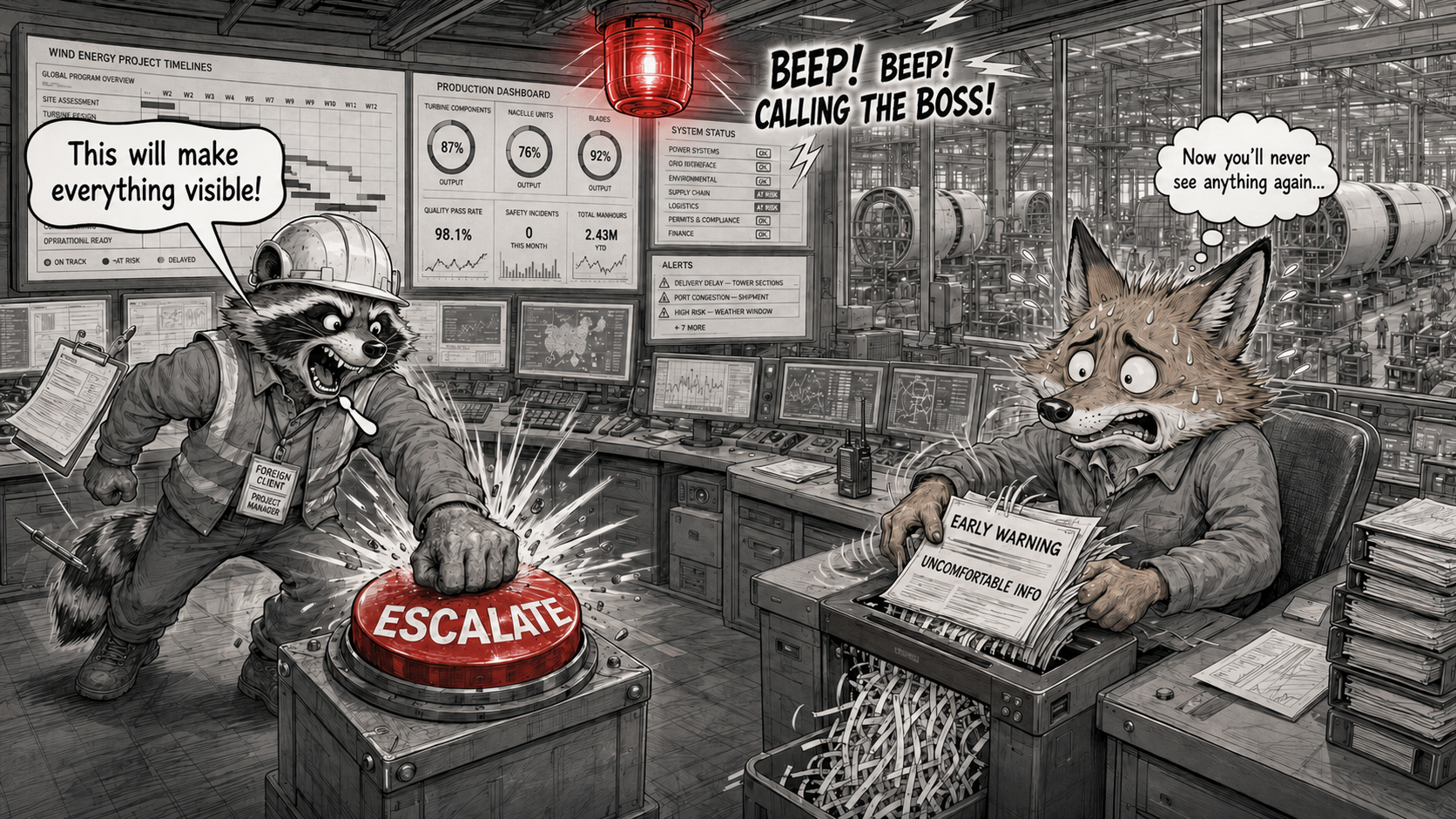
Imagine you are working with a Chinese supplier facing a serious delivery delay.
For two weeks, there have been meetings, emails and action lists, but little changes. Eventually, your Project Director calls the supplier’s senior management.
Suddenly, everything moves.
More resources are assigned. Daily updates begin. Something that seemed impossible a few days ago can now, somehow, be done.
The obvious lesson is: escalation works in China.
Quite often, it does. What happens inside the supplier after that phone call matters too.
What Happens After You Call the Boss
Many Chinese companies remain strongly hierarchical. Senior management can intervene directly in priorities, resources and execution, which is one reason escalation can produce dramatic results.
The same hierarchy can also make escalation costly for the people below.
Your counterpart may now have to explain why the customer went above them. Teams are working late, scrambling to fix the problem and preparing for questions from senior management. You may get the recovery plan you wanted.
At the same time, you have taught the working team something: bad news shared with you can travel quickly to their management and come back as pressure on them.
Next time, they may think twice before telling you, weighing the internal consequences if the problem travels upward again. The irony is that a successful escalation can make the next problem harder to see.
On a major energy project, that trade-off matters. Early access to uncomfortable information can sometimes be more valuable than immediate access to the Chairman.
Escalate Through Them, Not Around Them
I have seen international teams make both mistakes. Some hesitate to escalate until recovery becomes much harder. Others discover that calling senior management gets results and begin doing it whenever the working teams reach an impasse.
Neither approach works particularly well.
The more important question is how the issue reaches senior management.
If a problem is becoming critical, tell your counterpart clearly:
“This is affecting our critical path. If we cannot resolve it by Friday, I think we need to bring both management teams together. It would be helpful if you could also raise it internally.”
The deadline and consequence are clear. But your counterpart now has an opportunity to take the issue upward themselves.
That distinction matters. They can brief management, explain the context and position the escalation as a request for support, rather than explain why the customer bypassed them and called their boss.
The management conversation becomes:
“Our teams need management support to resolve this.”
rather than:
“The customer has called because our team failed to resolve this.”
The project issue is identical. The internal meaning of the escalation is not.
Know Where to Escalate
Strong senior relationships in China are valuable, but the most senior person is not always the right person to involve.
A production issue, engineering decision, commercial concession and contractual dispute may sit within different lines of authority. Escalating too low achieves nothing. Escalating unnecessarily high can create consequences far beyond what the issue requires.
The real skill is knowing when to escalate, who needs to be involved, and how to bring them in without undermining the people you still need to work with the next morning.
There is no simple escalation chart that tells you this. Formal titles matter, but so do reporting lines, personal influence, internal relationships and the way decisions are actually made. Reading that structure takes organizational understanding, cultural fluency and practical experience working with Chinese businesses.
Keep the Senior Relationship for When It Matters
Senior relationships at the top remain extremely valuable: when the project genuinely needs a change in priority, additional resources or a decision the working team cannot make.
A well-managed supplier relationship operates on two levels: enough trust at working level that problems surface early, and enough trust at senior level that difficult problems can be unlocked when necessary.
The skill is knowing when to move from one to the other without damaging the former.
The best escalation solves the problem without making the next problem harder to see.
About Nuancia
Nuancia offers a closer view of Chinese companies across international energy projects and supply chains, Chinese business culture, and the practical realities of working with Chinese companies.
Nuancia is published for general information and commentary only. It does not constitute legal, financial, investment, engineering or other professional advice. Views and interpretations are those of the author unless otherwise stated. Full disclaimer